
Embark on a journey to uncover the nuances between certified translation and general translation, delving into the realm of linguistic precision and accuracy.
Explore the essential distinctions that dictate when each type of translation is necessary, shedding light on the importance of meticulous language rendition.
Certified Translation vs General Translation
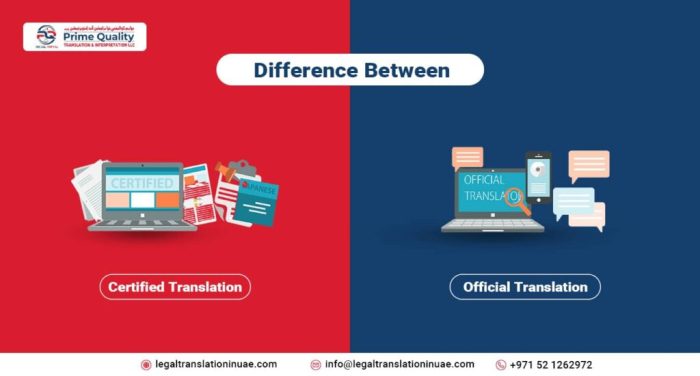
When it comes to translating documents, there are key differences between certified translation and general translation. Certified translation is typically required for legal or official documents, while general translation is used for everyday content.
Documents Requiring Certified Translation
- Birth certificates
- Marriage certificates
- Legal contracts
- Court documents
Documents Suitable for General Translation
- Website content
- Marketing materials
- Personal correspondence
- Articles and blog posts
Certified translation is crucial for ensuring accuracy and precision, as any errors in the translation of legal documents can have serious consequences. On the other hand, general translation focuses more on conveying the main ideas and concepts accurately without the need for official certification.
Translation Services
Translation services play a crucial role in facilitating communication across different languages and cultures. There are various types of translation services available in the industry to meet different needs and requirements.
Types of Translation Services
- General Translation: Involves translating content from one language to another without specialized knowledge in a particular field.
- Certified Translation: Involves translating official documents, such as birth certificates or legal contracts, by a certified translator.
- Technical Translation: Focuses on translating specialized technical documents, such as manuals or scientific papers, requiring subject matter expertise.
- Legal Translation: Involves translating legal documents, such as court transcripts or contracts, by translators with legal expertise.
- Medical Translation: Specialized translation of medical documents, such as patient records or pharmaceutical information, requiring medical knowledge.
Machine vs. Human Translation Services
Machine translation services, powered by algorithms, offer quick and cost-effective translations. However, they may lack accuracy and nuance, especially in complex or specialized content. On the other hand, human translation services provide contextually accurate and culturally sensitive translations, ensuring quality and precision.
Significance of Localization
Localization in translation services involves adapting content to the cultural and linguistic nuances of the target audience. This is crucial for global businesses to effectively communicate with their international customers and clients. Localization ensures that the translated content resonates with the local audience, leading to better engagement and understanding.
In conclusion, the discussion surrounding certified translation versus general translation illuminates the critical role of accuracy in conveying information effectively across language barriers. As language bridges cultures and facilitates communication, the choice between these translation types becomes a pivotal decision in ensuring clarity and reliability.
FAQ
When is certified translation necessary?
Certified translation is typically required for legal documents, such as birth certificates, marriage certificates, and academic transcripts, that need to be submitted to official institutions.
What documents are suitable for general translation?
Documents like general correspondence, articles, or non-legal materials can be translated through general translation services.
How do machine translation services differ from human translation services?
Machine translation services rely on algorithms and technology for translation, while human translation services involve skilled linguists who provide nuanced and contextually accurate translations.
What role does localization play in translation services?
Localization ensures that translations are culturally appropriate and tailored to specific regions, enhancing the effectiveness of communication in global business contexts.


