
Embark on a journey to explore the intricacies of choosing a translation service, from understanding the different types to researching providers and budgeting effectively.
Discover the key factors that play a crucial role in selecting the right translation service for your needs.
Understanding Translation Services
Translation services play a crucial role in today’s globalized world, facilitating communication across different languages and cultures. These services help businesses, organizations, and individuals break down language barriers and reach a wider audience.
Types of Translation Services
There are various types of translation services available to cater to different needs:
- Document Translation: Translating official documents, legal papers, contracts, and other written materials.
- Website Localization: Adapting websites and online content to suit the linguistic and cultural preferences of target audiences.
- Simultaneous Interpretation: Providing real-time interpretation services for conferences, meetings, and events.
Industries Relying on Translation Services
Several industries heavily rely on translation services to communicate effectively with their global clientele. Some examples include:
- E-commerce: Online retailers often require translation services to localize product descriptions, customer reviews, and marketing materials for international customers.
- Travel: The travel industry depends on accurate translation to provide information about destinations, accommodations, and travel itineraries in multiple languages.
- Healthcare: In healthcare settings, medical documents, patient records, and instructions need to be accurately translated to ensure effective communication between healthcare providers and patients from diverse linguistic backgrounds.
Factors to Consider When Choosing a Translation Service
When selecting a translation service, several crucial factors should be taken into account to ensure the accuracy and quality of the translated content. From expertise to quality control, each element plays a vital role in determining the effectiveness of the translation service.
Accuracy
One of the most critical factors to consider is the accuracy of the translation. The service provider should have a team of skilled translators who are proficient in both the source and target languages. Accuracy ensures that the original message is conveyed correctly without any loss of meaning.
Speed
Speed is another important consideration, especially for time-sensitive projects. While quick turnaround times are desirable, it should not compromise the accuracy of the translation. A balance between speed and quality is crucial to ensure timely delivery without sacrificing the precision of the content.
Confidentiality
Confidentiality is paramount when dealing with sensitive information. Ensure that the translation service has robust confidentiality measures in place to protect your data and intellectual property. Non-disclosure agreements (NDAs) and secure data handling practices are essential for maintaining confidentiality.
Expertise in Specific Industries
Industry-specific knowledge is crucial for accurate translations in specialized fields such as legal, medical, or technical industries. Working with translators who have expertise in these areas ensures that the terminology and nuances are accurately conveyed, maintaining the integrity of the content.
Native Speakers or Professionals Fluent in the Target Language
Collaborating with native speakers or professionals fluent in the target language is invaluable for capturing cultural nuances and idiomatic expressions. They can provide insights that non-native speakers might overlook, enhancing the overall quality and authenticity of the translation.
Quality Control Measures
Quality control measures, such as proofreading, editing, and review processes, are essential for ensuring the accuracy and consistency of the translated content. These measures help identify and rectify any errors or inconsistencies, guaranteeing a high-quality final product.
Researching Translation Service Providers
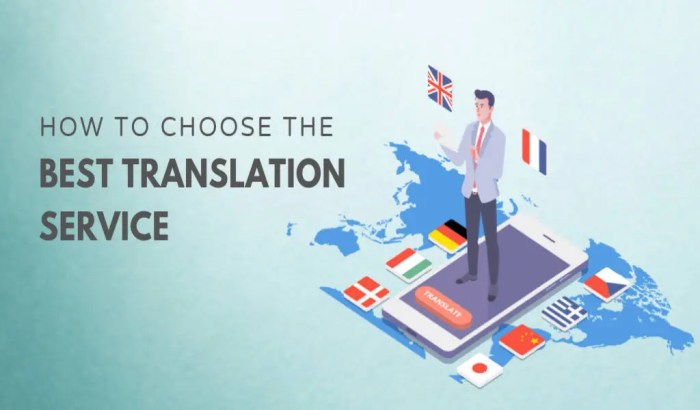
When looking for a reliable translation service provider, conducting thorough research is crucial to ensure the quality and accuracy of the translations you receive. Here are some tips on how to research and evaluate translation service providers:
Reading Reviews and Testimonials
- Check online reviews and testimonials from previous clients to get an idea of the provider’s reputation and quality of service.
- Look for feedback on factors such as accuracy, timeliness, customer service, and overall satisfaction.
- Consider reaching out to other businesses or individuals who have used the service for firsthand recommendations.
Asking for Samples
- Request samples of previous work to assess the quality of translations, language proficiency, and attention to detail.
- Reviewing samples can help you determine if the provider can meet your specific translation needs and requirements.
- Look for consistency in terminology, tone, and style across different samples.
Checking Certifications and Qualifications
- Verify that the translation service provider has certifications or accreditations from reputable organizations in the industry.
- Check the qualifications and experience of the translators who will be working on your projects.
- Ensure that the provider follows industry standards and best practices for translation services.
Role of Technology in Modern Translation Services
Technology plays a significant role in modern translation services, enhancing efficiency, accuracy, and consistency in translations. Here are some key technological advancements used in translation services:
Machine Translation
- Machine translation uses algorithms to translate text from one language to another quickly.
- While machine translation can be useful for simple, straightforward translations, it may not always capture the nuances and cultural context of the original text.
- Human post-editing is often required to ensure the accuracy and quality of machine-translated content.
CAT Tools (Computer-Assisted Translation)
- CAT tools help translators work more efficiently by storing translation memories, glossaries, and terminology databases.
- These tools aid in consistency across translations, increase productivity, and streamline the translation process.
- CAT tools are particularly beneficial for large projects or ongoing translation needs.
Benefits of Working with a Translation Agency vs. an Individual Translator
When choosing between a translation agency and an individual translator, there are distinct advantages to working with a translation agency:
Access to a Team of Experts
- Translation agencies have a pool of experienced translators with expertise in various industries and languages.
- Agencies can assign the most suitable translator to your project based on their skills and background.
- Working with a team of experts ensures quality control, consistency, and accuracy in translations.
Scalability and Flexibility
- Translation agencies can handle projects of any size or complexity, offering scalability to meet your evolving translation needs.
- Agencies have the resources to manage multiple projects simultaneously and meet tight deadlines.
- They can provide additional services such as localization, desktop publishing, and project management for comprehensive language solutions.
Cost and Budgeting for Translation Services
When it comes to translation services, understanding the cost involved and effectively budgeting for it is crucial. Here, we will delve into the different pricing models used by translation service providers, tips for budgeting without compromising on quality, and how to negotiate prices for the best deal.
Different Pricing Models
Translation service providers typically use various pricing models to determine the cost of their services. Some common models include:
- Per Word: Many providers charge based on the number of words in the source text.
- Per Hour: Some providers charge by the hour, especially for more complex projects or interpretation services.
- Project-Based: For larger projects, providers may offer a fixed price for the entire project.
Budgeting Effectively
When budgeting for translation services, it’s essential to consider the quality of the work alongside the cost. Here are some tips for effective budgeting:
- Assess the scope of the project and determine a realistic budget based on the pricing model.
- Request quotes from multiple providers to compare prices and services offered.
- Allocate a budget for potential revisions or additional services that may be needed.
Negotiating Prices
Negotiating prices with translation service providers can help you secure a better deal. Here are some tips for successful negotiations:
- Provide detailed information about your project to receive an accurate quote.
- Ask if there are any discounts available for bulk projects or long-term partnerships.
- Discuss the possibility of a payment plan or flexible terms to accommodate your budget.
In conclusion, navigating the world of translation services requires careful consideration of various factors to ensure quality and accuracy in communication across languages.
Quick FAQs
What factors should I consider when choosing a translation service?
Consider factors like accuracy, speed, expertise in specific industries, and the use of native speakers or professionals fluent in the target language.
How can I effectively budget for translation services?
Understand the different pricing models, negotiate prices with providers, and prioritize quality without overspending.
Why is researching translation service providers important?
Research helps in evaluating providers, checking certifications, reading reviews, and ensuring you work with a reputable service.


